

The Gold Coast is best known for its beaches and skyline, but its natural landscape extends far beyond the shoreline. Within a short drive, the scenery shifts from surf beaches to subtropical rainforest, freshwater creeks, wetlands, and protected marine parks. Kangaroos and koalas inhabit forest reserves near the city, while dolphins, turtles, and migrating whales move through nearby coastal waters. For travellers who want to experience the quieter, more grounded side of the region, the Gold Coast offers a wide range of outdoor and wildlife-based experiences that are easy to access and rewarding to explore. TicketsToDo presents 11 nature-focused attractions on the Gold Coast that offer meaningful ways to connect, whether you are visiting for a day or building a longer itinerary.
1. Springbrook National Park and Natural Bridge
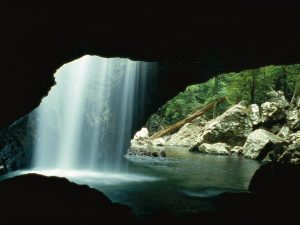
By day, Natural Bridge is a sun-dappled sanctuary of cascading water and ancient Gondwana rainforest. By night, the basalt cave transforms into a subterranean galaxy as thousands of bioluminescent glow-worms light up the dark.
Less than an hour from the coast, Springbrook National Park protects part of the ancient Gondwana rainforest system. The park is known for its dramatic scenery, including deep valleys, basalt cliffs, and several waterfalls. Natural Bridge is one of the most distinctive features, a rock arch formed by Cave Creek cutting through volcanic rock. At night, glowworms illuminate the cave ceiling, making it one of the most memorable after-dark nature experiences on the Gold Coast. Walking tracks such as the Purling Brook Falls circuit provide access to dense rainforest and lookout points.
Why visit: World Heritage rainforest, waterfalls, glowworm viewing
Best time: Morning for walking tracks, evening for glowworms
Tips: Paths can be damp year-round. Wear sturdy shoes and carry a light jacket.
2. Lamington National Park
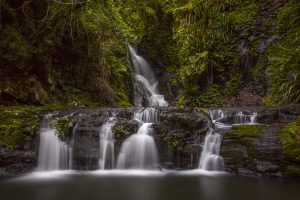
As part of the Gondwana Rainforests of Australia, this landscape protects Antarctic Beech trees that have remained unchanged for over 180 million years. Some of these moss-covered ‘living fossils’ feature root systems estimated to be thousands of years old, surviving from a time when the Earth’s climate was much cooler.
Lamington National Park is one of Australia’s most significant rainforest reserves and forms part of the Gondwana Rainforests of Australia World Heritage Area. The park features towering tree ferns, subtropical canopy, and an extensive network of walking tracks that range from short boardwalks to full-day hikes. The Green Mountains and Binna Burra sections are particularly popular for their lookouts, creeks, and birdlife, including king parrots and satin bowerbirds.
Why visit: Ancient rainforest, birdwatching, long and short bushwalks
Best time: Autumn and spring for cooler walking conditions
Tips: Start early on weekends. Parking areas can fill quickly.
3. Currumbin Wildlife Sanctuary

Research at Currumbin Wildlife Sanctuary highlights the extreme evolutionary specialization of the Koala. To survive on a diet of nutrient-poor Eucalyptus—consuming up to 500g of specific leaves daily, they have evolved a low-metabolic strategy, resting for up to 20 hours a day.
Established in 1947, Currumbin Wildlife Sanctuary is one of the Gold Coast’s longest-running wildlife attractions. It provides opportunities to see native Australian animals up close while learning about conservation and rehabilitation. Visitors can hand-feed lorikeets, observe koalas and kangaroos, and visit the on-site wildlife hospital. Daily keeper talks and presentations offer insight into animal care and native ecosystems.
Why visit: Australian wildlife encounters, conservation education
Best time: Early morning when animals are most active
Tips: Some animal experiences have limited capacity. Booking ahead is recommended.
Currumbin Wildlife Sanctuary Tickets
4. Tallebudgera Creek
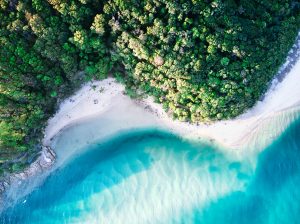
Tallebudgera Creek owes its crystal-clear turquoise waters to a unique natural filtration system. This tidal ecosystem is a haven for biodiversity, supporting everything from migratory shorebirds to juvenile fish species that seek refuge in its mangrove fringes.
Tallebudgera Creek sits between the ocean and the forested slopes of Burleigh Head National Park. Its clear, calm waters make it ideal for swimming, paddleboarding, and kayaking, especially for families. Shaded picnic areas and upgraded walking paths line the estuary, making it a relaxed spot to spend several hours close to nature without leaving the city.
Why visit: Calm water activities, relaxed outdoor setting
Best time: Late morning to afternoon on warm days
Tips: Some sections are rocky. Reef shoes can be helpful.
5. Coombabah Lakelands Conservation Area
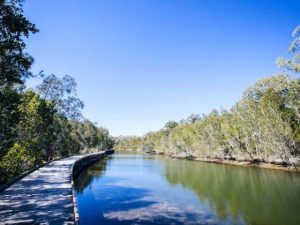
Located on the northern Gold Coast, the Coombabah Lakelands Conservation Area is a 1,200-hectare sanctuary of immense ecological significance. It is a critical component of the Moreton Bay Ramsar site, recognized internationally for protecting one of the region’s most pristine estuarine heritage landscapes.
Coombabah Lakelands Conservation Area protects wetlands, forest, and grassland habitats on the northern Gold Coast. It is one of the best places in the region to see wildlife in the wild, including kangaroos, wallabies, and a wide variety of bird species. Walking trails pass through eucalyptus forest and wetland zones, offering a quiet alternative to busier nature parks.
Why visit: Wild kangaroos, birdwatching, peaceful walking trails
Best time: Early morning or late afternoon
Tips: Bring insect repellent, especially during warmer months.
6. Whale Watching Cruises on the Gold Coast
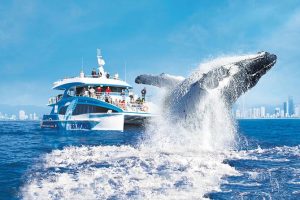
Whale watching on the Gold Coast offers a premier window into the Humpback Highway, a migratory corridor used by approximately 40,000 Humpback whales annually. These cetaceans journey over 10,000 kilometres from Antarctic feeding grounds to the sub-tropical calving waters of the Great Barrier Reef, passing within miles of the Gold Coast’s continental shelf.
Each year between June and October, humpback whales migrate along Australia’s east coast, passing close to the Gold Coast shoreline. Whale watching cruises operate during this period and offer opportunities to observe breaching, tail slaps, and other behaviours from the water. Many tours are accompanied by marine guides who explain migration patterns and whale biology.
Why go: Seasonal marine wildlife experience
Best time: Winter to early spring
Tips: Sea conditions vary. Motion sickness tablets can be useful.
7. Broadwater Marine Park
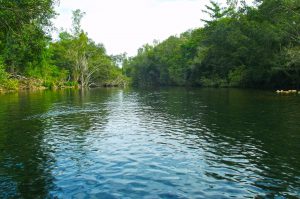
The Broadwater Parklands in Southport represents a sophisticated integration of urban forest and marine estuary management. While the central body of water is a tidal estuary connected to the Pacific Ocean, the park features a man-made Urban Wetland designed to mimic a freshwater lake system.
The Broadwater Marine Park stretches between Southport and The Spit and is known for its calm, protected waters. It is a popular location for kayaking and stand-up paddleboarding, with regular sightings of dolphins and seabirds. The sheltered conditions make it suitable for beginners and those looking for a low-impact way to explore the marine environment.
Why visit: Kayaking, marine wildlife viewing
Best time: Early morning for calmer conditions
Tips: Sun protection is essential. Shade is limited on the water.
8. Surfers Paradise Beach at Sunrise
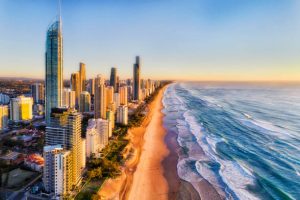
Surfers Paradise Beach is an iconic high-energy dissipative beach, defined by fine silica sands and a unique “urban canyon” skyline. Maintained by the East Australian Current and a large-scale Sand Bypass System, its managed dune systems protect a critical littoral zone against erosion while supporting local marine biodiversity.
Surfers Paradise takes on a different character at sunrise. Before crowds arrive, the beach is quiet and expansive, with soft light reflecting off the ocean. It is a popular time for walking, stretching, or simply sitting near the water while seabirds skim the shoreline.
Why go: Peaceful coastal experience, sunrise views
Best time: 30 to 60 minutes before sunrise
Tips: Bring a light layer. Mornings can be cool even in warmer months.
9. Currumbin Rock Pools and Forest Walks
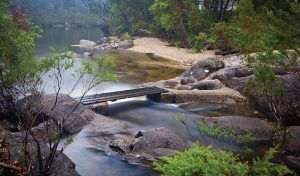
The Currumbin Rock Pools and the adjacent Mount Cougal section of Springbrook National Park represent a critical freshwater catchment for the Gold Coast. Fed by the pristine headwaters of Currumbin Creek, these pools are geologically defined by ancient volcanic basalt boulders, remnants of the Tweed Shield Volcano.
Located inland from Currumbin Beach, the rock pools and surrounding forest tracks offer a refreshing escape from the coast. The pools are popular for swimming during warmer months, while short walking trails lead through bushland that supports birdlife, frogs, and small mammals. It is an easy half-day outing suitable for families and solo travellers.
Why visit: Freshwater swimming, short forest walks
Best time: Midday during summer
Tips: Avoid swimming after heavy rain. Rocks can be slippery.
10. Tamborine Mountain Rainforest Experiences
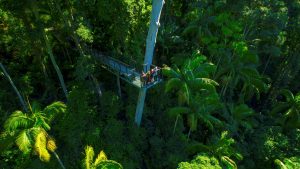
A cornerstone of the visitor experience is the Tamborine Rainforest Skywalk, a 300-metre steel bridge system designed to minimize environmental impact on the forest floor. Its 40-metre cantilever extends 30 metres above the Cedar Creek gorge, providing a rare vantage point to observe the forest’s biodiversity, such as Staghorn and Bird’s Nest ferns, which are essential to the mountain’s water-cycling ecosystem.
Tamborine Mountain rises above the coastal plain and offers a mix of rainforest walks, waterfalls, and scenic lookouts. Boardwalks and treetop walks allow visitors to experience the canopy at close range, while trails lead to sites such as Curtis Falls. The area also includes small villages, local produce, and lookout points with views across the hinterland.
Why go: Rainforest walks, waterfalls, elevated views
Best time: Late winter to early autumn
Tips: Morning fog can affect visibility. Allow extra time if views are important.
Tamborine Rainforest Skywalk Tickets
11. Dreamworld Wildlife and Conservation Experiences

Beyond its status as a theme park, Dreamworld operates as a significant zoological facility and a global leader in ex-situ conservation. The precinct is home to over 500 native Australian animals and is a key participant in the Species Management Program (SMP), focusing on the genetic diversity and preservation of vulnerable species like the Koala, Bilby, and Tasmanian Devil.
Located in Coomera, around 30 minutes north of Surfers Paradise, Dreamworld is widely recognised as a theme park, but it also includes dedicated wildlife and conservation-focused areas. Beyond the rides, visitors can see kangaroos, koalas, dingoes, crocodiles, and tigers in open, landscaped precincts designed to support education and conservation awareness. Tiger Island, in particular, focuses on conservation messaging and animal care.
For travellers visiting with family, Dreamworld offers a full-day experience that combines outdoor environments with structured wildlife encounters and educational presentations. Entry tickets generally include access to animal exhibits and scheduled talks, making it straightforward to plan a visit. Tickets can be booked in advance through TicketsToDo, which is especially helpful during school holiday periods.
Why it suits nature-focused travellers: Wildlife encounters with conservation context
Allow: Half day to full day
Best time: Weekdays or early arrival
Accessibility: Flat pathways and wheelchair-friendly access throughout most areas
Dreamworld Wildlife and Conservation Tickets
Practical Tips for Nature Experiences on the Gold Coast
Getting around: Many hinterland and conservation areas are easiest to reach by car. Public transport options are limited outside the coastal corridor.
Weather awareness: Hinterland areas are often cooler and wetter than the coast. Carry layers and rain protection.
Wildlife respect: Observe animals from a distance and follow posted guidelines. Feeding wildlife outside designated areas is discouraged
Safety considerations: Trails and rock pools can be slippery after rain. Always check local conditions before swimming or hiking.
From rainforest walks and freshwater creeks to marine wildlife encounters and coastal experiences, the Gold Coast offers a diverse range of ways to engage with nature. These attractions highlight a side of the region that rewards slower travel and closer attention, making them valuable additions to any well-planned Gold Coast itinerary.
Top 3 activities to do at Gold Coast
The Gold Coast offers everything from world-class theme parks and wildlife encounters to sweeping coastal views, so choosing a few standout activities helps shape a memorable itinerary without feeling rushed. Browse other activities to do at Gold Coast to discover more options, but if you’re short on time, here are our top three picks that consistently rank among the most popular and rewarding experiences.
SkyPoint Observation Deck
Located atop the Q1 building in Surfers Paradise, it delivers 360° views of the coastline, hinterland, and skyline, plus the famous SkyPoint Climb for adventure seekers. Regularly listed among the top non-theme-park attractions by visitor numbers and review rankings, especially popular for sunset visits.
SkyPoint Observation Deck Tickets
Aquaduck Gold Coast
The Aquaduck Gold Coast is a guided amphibious city tour that travels through the streets of Surfers Paradise before splashing into the waterways of the Gold Coast Broadwater, offering a unique perspective of both the skyline and the waterfront mansions. Departing near Cavill Avenue in Surfers Paradise, the experience typically lasts around one hour and combines sightseeing with live commentary from onboard guides.
Gold Coast Hot Air Balloon Flight
Floating above the rolling farmland and forested valleys of the Gold Coast Hinterland at sunrise offers a peaceful contrast to the coastline’s buzz. Hot air balloon flights typically depart early in the morning, drifting quietly over vineyards, rivers, and mountain ridges while pilots share insights about the region’s landscape and wildlife. This experience lasts about 3 to 4 hours including transfers and setup. It’s one of the most memorable ways to experience the natural beauty of the Gold Coast from above, especially for couples and photographers seeking soft morning light.
From unique sightseeing tours and wildlife encounters to scenic experiences that showcase its hinterland and waterways, these activities highlight the region’s diversity and appeal for all kinds of travellers.